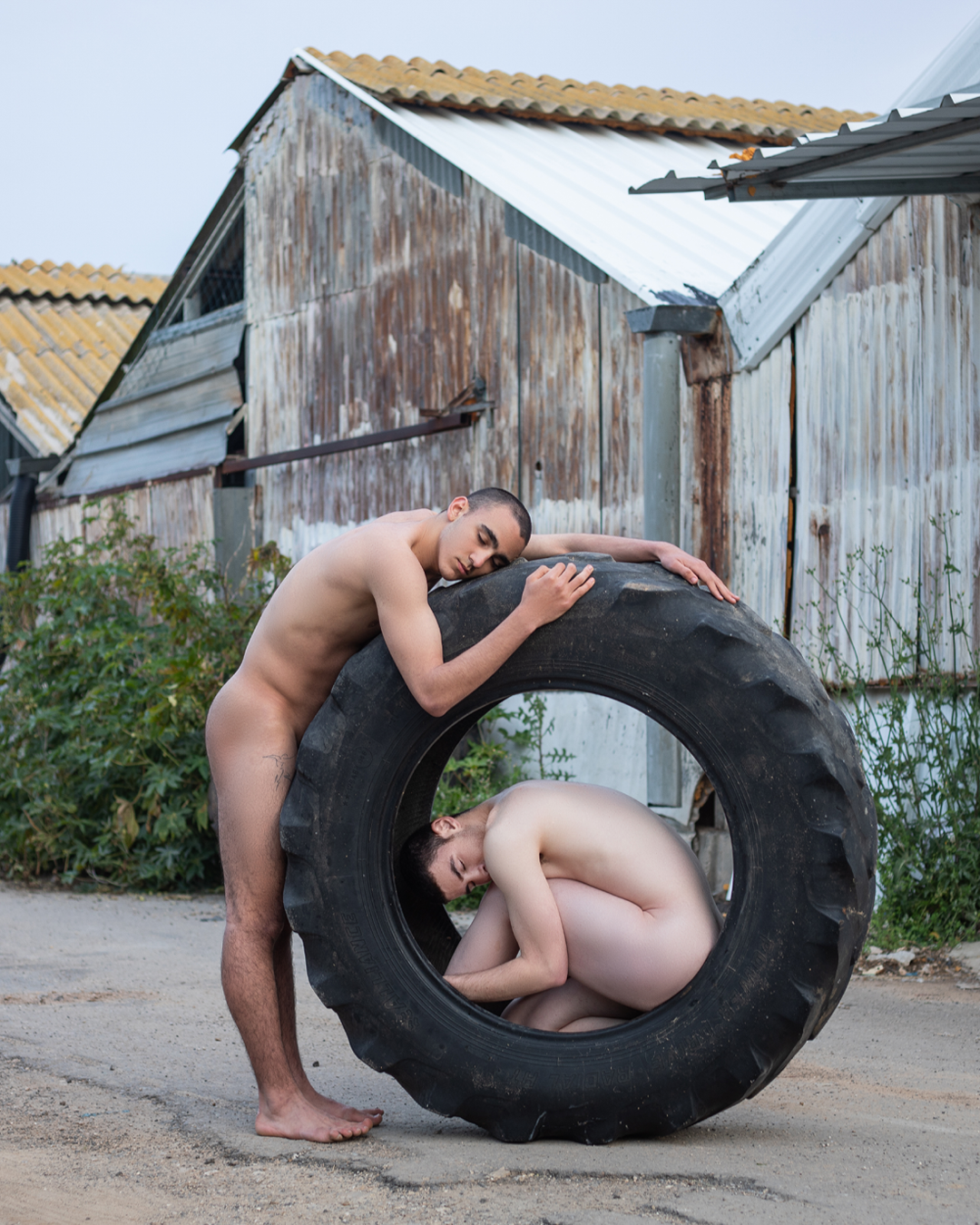
Rethink the Mundane
Omer Ga’ash’s solo exhibition “Rethink the Mundane” opens on 12 May 2025 at The Israeli Opera Tel Aviv-Yafo. By invoking the everyday—rock outcrops, city façades, rolling fields—as sites of uncanny beauty, Ga’ash urges us to question what we pass by unremarked. His meticulously composited images fuse bodies and environment so seamlessly that what once seemed ordinary becomes charged with new, poetic possibility. The title captures the exhibition’s core ambition: to transform the familiar into the extraordinary. In each scene, limbs echo architectural angles, torsos mirror geological contours, and models merge into the backdrop until neither figure nor landscape can be called “mere” setting or “simple” form. Through this alchemy, Ga’ash opens our eyes to the latent wonder in the world around us.

Terrence Higgins Trust, 2025 - Timed Auction
It all begins with an idea. Maybe you want to launch a business. Maybe you want to turn a hobby into something more. Or maybe you have a creative project to share with the world. Whatever it is, the way you tell your story online can make all the difference.

Making the Corporeal Abstract
Making the Corporeal Abstract presents Ga’ash’s photographs of undressed bodies translated into pattern, applied to different materials from the norm. Via the manipulation of imagery, he generates patterns that do not exist in nature, but which allude to both the natural and the unnatural - if not the supernatural. His goal is to suspend judgment, to blur boundaries (personal, geographical), and to create connections between characters who may never have met, and may never meet, and thereby to tell a new and different story.
Through interaction with the patterns; from a distance and then up close and somewhat personal –shapes become people (become shapes etc). Pattern suggests infinity, and the arbitrary cut lines in any format serve to emphasise this further still. And beyond repetition, Ga’ash uses intensity of colour to blur gender, race and age, and tothereby create uniformity and acceptability.
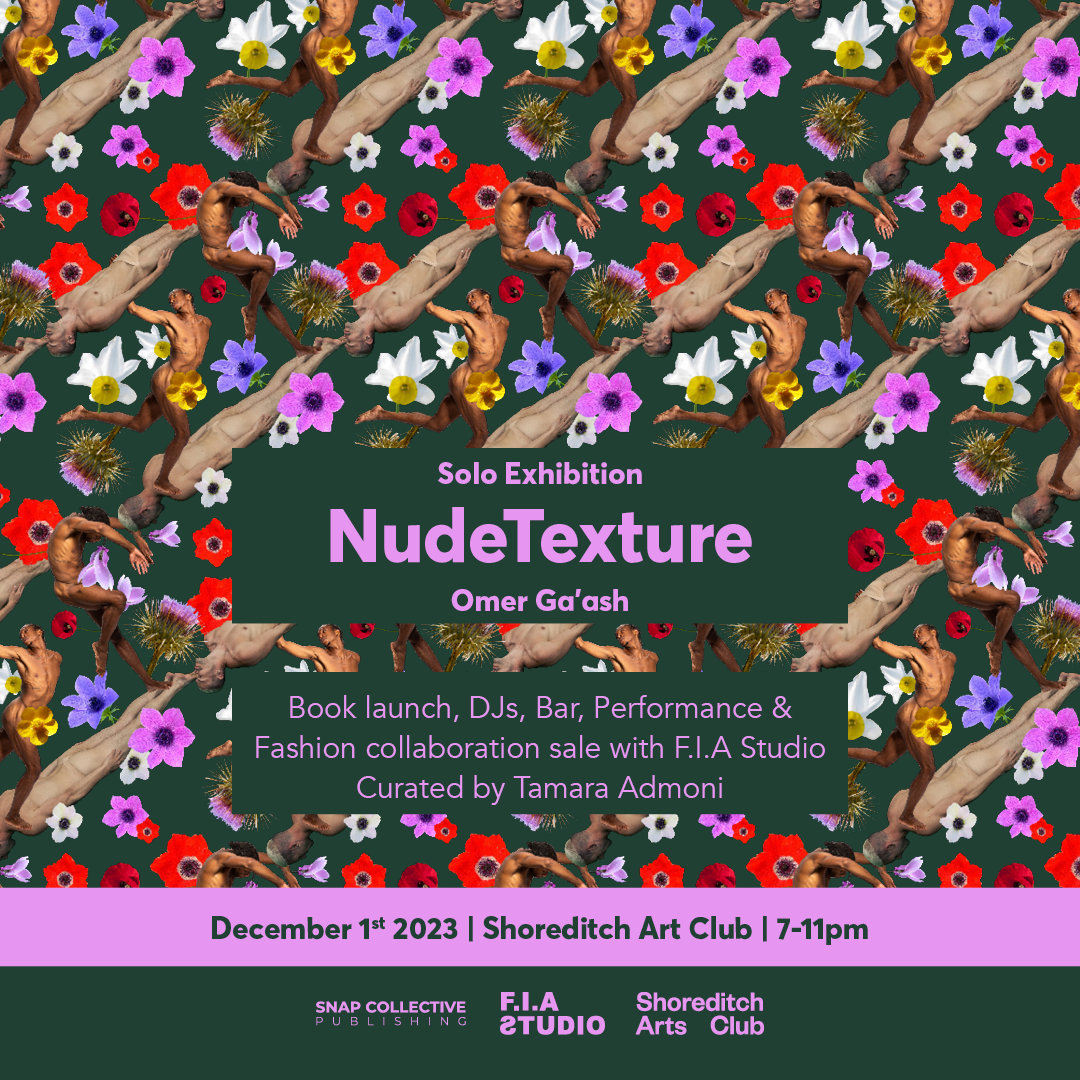
NudeTexture
NudeTexture by Omer Ga’ash continues the multidisciplinary artist’s exploration of the human body and its connections with itself, other bodies, and the surrounding environment. Each of the three video works presented in the main space of Shoreditch Arts Club focuses on the body within a distinct context: nature, urbanism, and culture. Together, these pieces create a surrealist atmosphere of figures and elements intertwining, transforming, and melding into one another. As the boundaries between the shapes in the videos are constantly changing and blurring, the work asks where the human ends and “the other” begins.
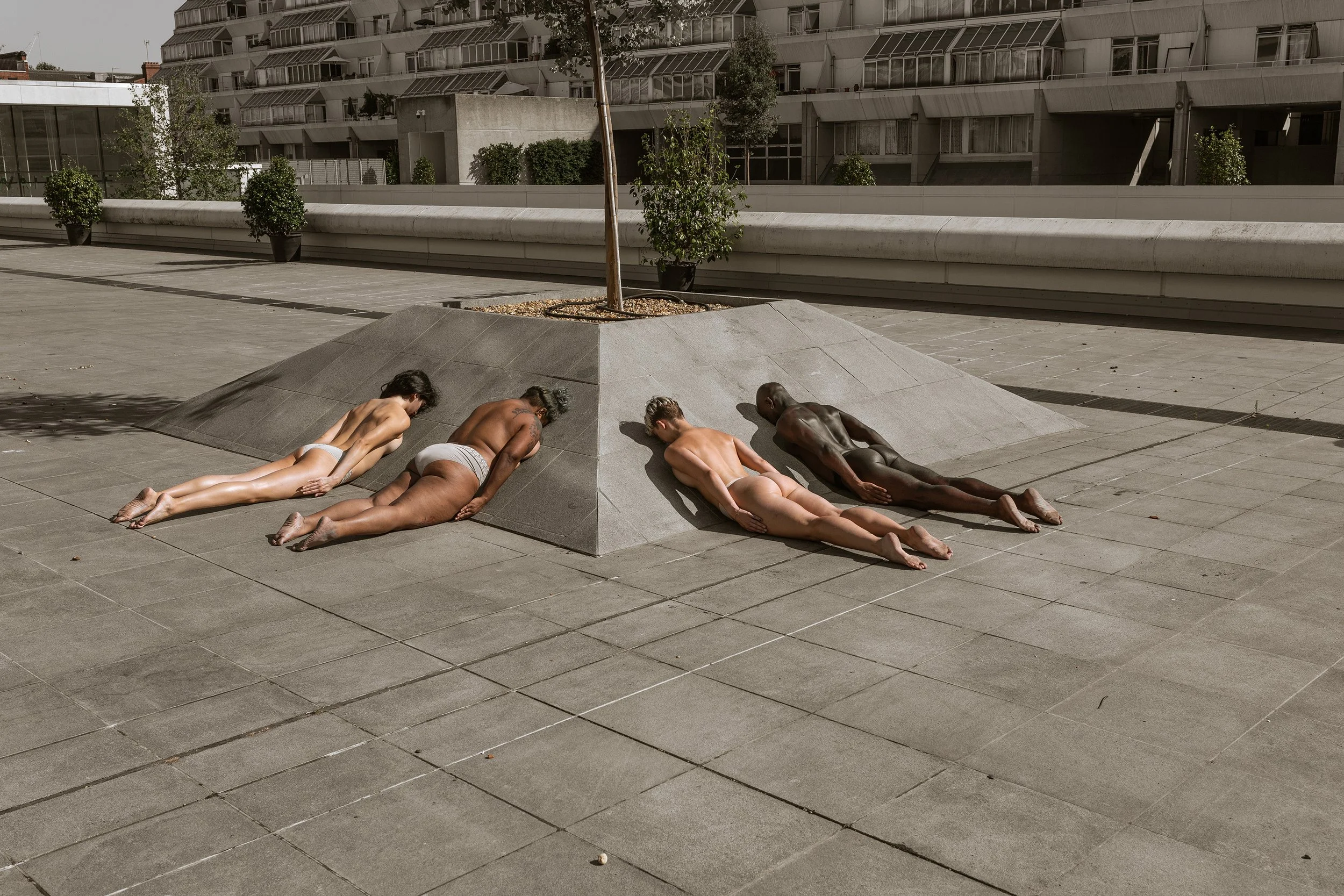
Barefoot Bare Concrete
Concept photo shoot package including; Stills, Video, Reel, Behind the scenes at the Brunswick London. Raised in the late 1960s as a radical modernist vision by Patrick Hodgkinson, The Brunswick Centre stands on the traces of demolished Georgian homes, its raw concrete forms once rejected, now preserved as a monument to a future that arrived too early.
Within this suspended architecture, bodies fold into its terraces and voids, echoing a structure that, like them, exists between intention and adaptation, between what was imagined and what endures.
Art Director, Photographer - Omer Ga'ash.
In collaboration with Cinematographer Omri Dagan (Video, BTS and stills of me modeling).
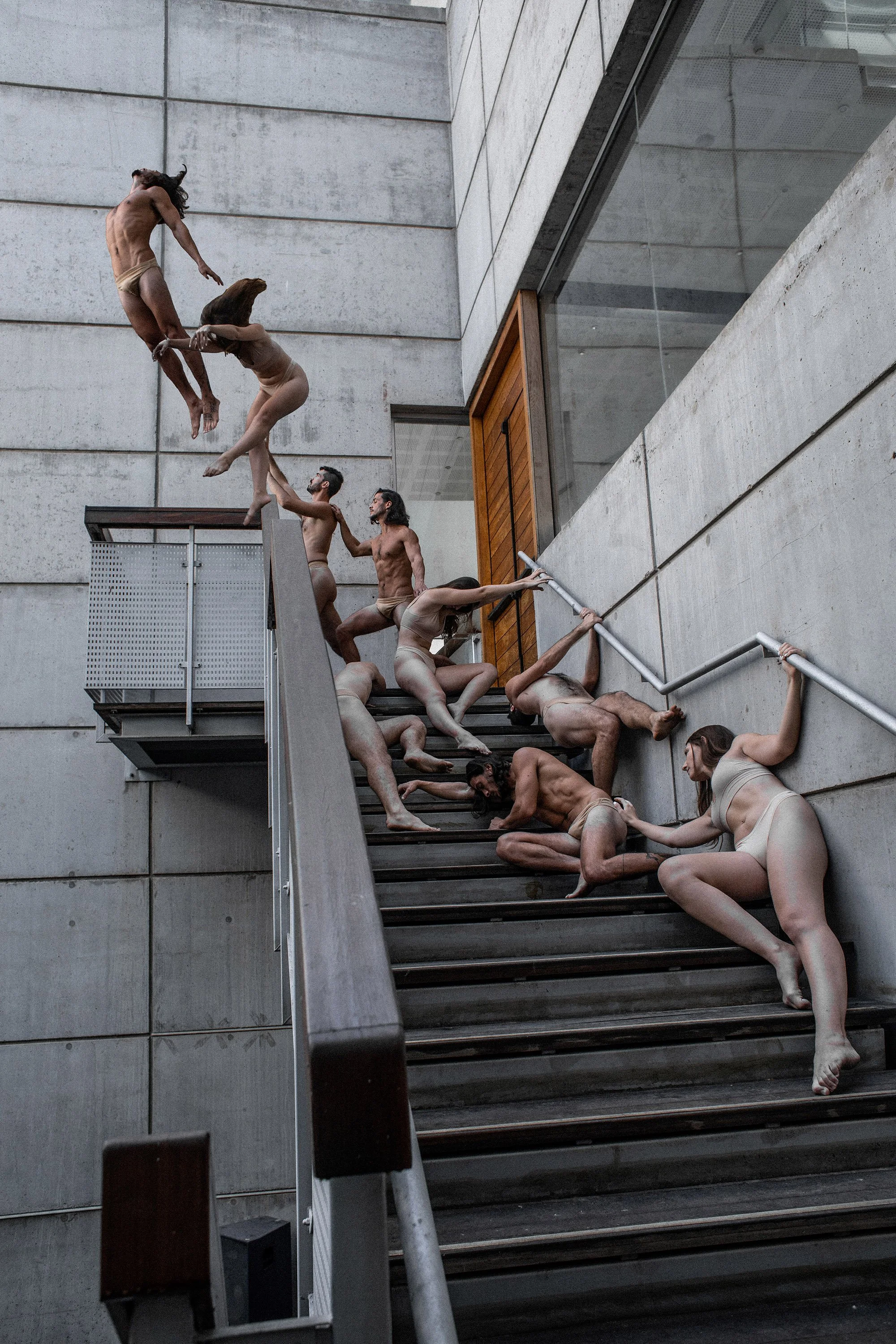
Mapping the Cameri Theater
Born over two days with seven dancers, this work traces the anatomy of the Cameri Theatre, its corridors, staircases, and inner courtyard, mapping movement onto structure. The architecture echoes a forest imagined through A Midsummer Night’s Dream: brown columns rise like branches, holding space between reality and myth. Wood, metal, marble, and bare concrete converge materials in quiet tension shaping a place that feels both immediate and eternal.
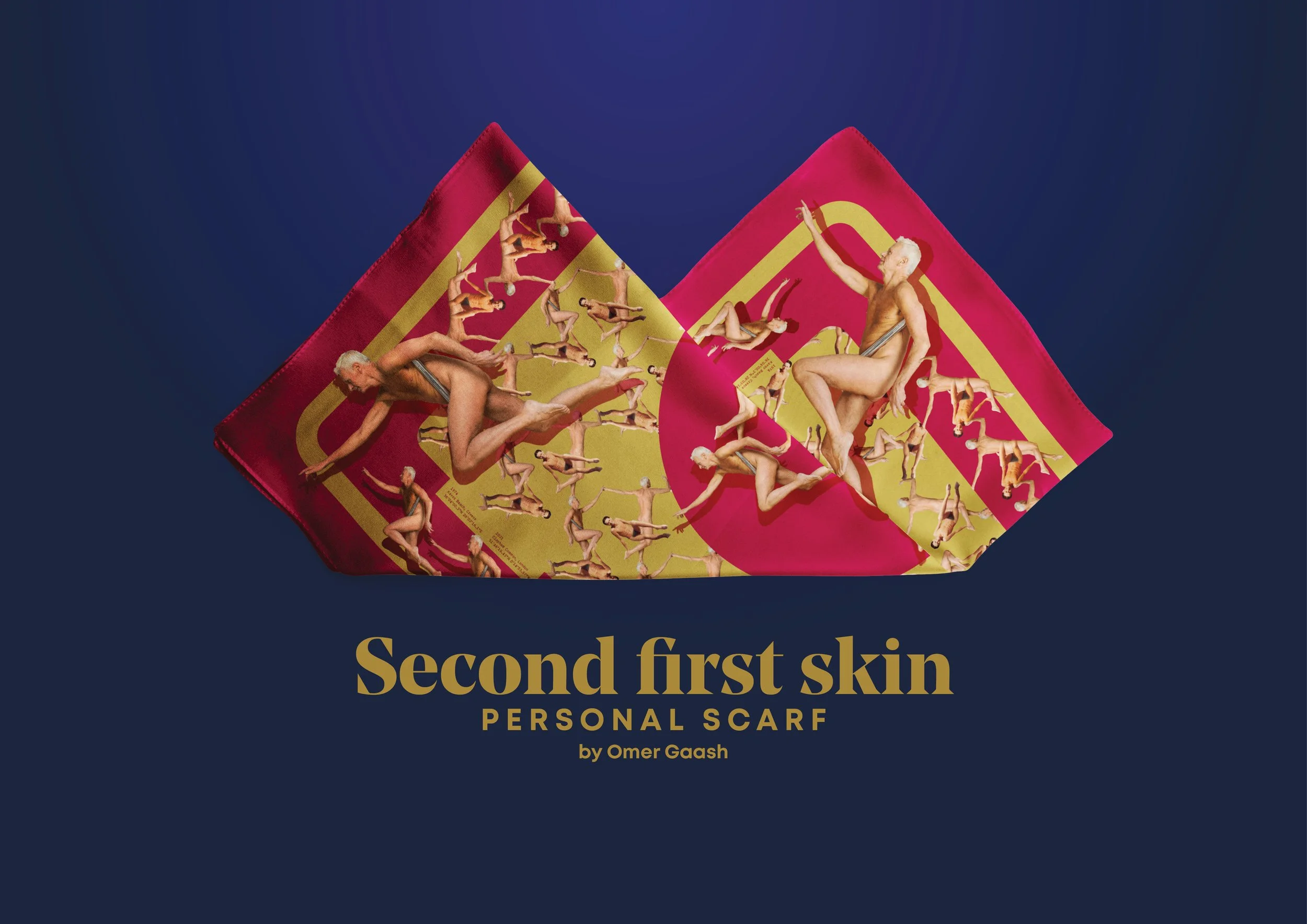
Second First Skin
Rooted in a multidisciplinary practice spanning architecture, cartography, photography and dance, this body of work brings a deeply personal inquiry into dialogue with a broader cultural and social landscape. The artist draws on formative experiences of bodily freedom and collective ease, moments unburdened by scrutiny, to reframe the way we encounter the human form today.
At the centre of the project is a precise yet poetic gesture: archival and newly produced nude self-images are translated into intricate textile patterns, then realised as scarves. These garments, objects historically poised between adornment, modesty and identity, become carriers of layered narratives. What is typically concealed is neither simply revealed nor sensationalised, but abstracted, fragmented, and reassembled into something both intimate and publicly legible.
The work navigates the tension between visibility and protection. By reducing the body to pattern, scale and rhythm, the artist offers a form of mediation, one that preserves anonymity while asserting presence. Each piece becomes a site where temporalities converge: past and present selves coexist, mapping the body as a shifting terrain marked by memory, geography and lived experience.
Rather than positioning the nude as an endpoint, the project treats it as a material, one that can be edited, recontextualised, and ultimately reclaimed. In doing so, it proposes a subtle yet pointed reorientation of the gaze: from judgement to recognition, from exposure to authorship.